
2027 Candidates for President-Elect
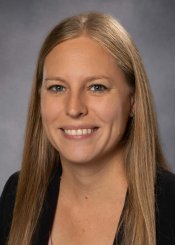 Andrea Dinkel |
 Joey Nickols |
Andrea Dinkel, Galena
SEKMEA Jazz Chair 2022-25
KMEA All-State 1234A Band Chair 2023-25
Andrea is a proud product of Kansas music programs, having attended schools in the Hays, Topeka, Shawnee Mission, and Olathe school districts. In each place, the music classroom was the one constant where she felt welcome, understood, and encouraged. She stays busy paying this great gift forward through music teaching and service to the profession. She has contributed to publications and professional discussions through KMEA, C-NAfME, and regional colleges on practical solutions for small-school music programs and strategies for new music teachers. She served as SEKMEA President (2019-2021), KMEA’s All-State 1234A Band Chair (2023–2025), and SEKMEA’s High School Jazz Chair (2022-2025). She contributed to the KSHSAA Virtual Festivals Committee in 2021 and the Small Schools Committee as part of President Phillips’s Strategic Plan. Many positive things we enjoy today grew from discussions and projects within that committee, led by Vesta Jo Still of Phillipsburg, including the 12A Honor Band, the Small Schools Hotline on the KMEA webpage, and improved representation of flex-band music on the KSHSAA Published Music List. Andrea helped develop the four-year rotation of all-state audition materials for flute. She also served on the panel that determined the passing score for the Praxis: Instrumental Music and General Knowledge 5115 (2021), taught Guitar Pedagogy for Missouri Southern State University (2023), hosts student teachers in collaboration with Pittsburg State University, and serves as a mentor for area band teachers through SEKMEA.
Andrea supports her local music community through performing with area wind ensembles, parade judging, and guest clinician work throughout southeast Kansas and southwest Missouri. She co-founded and served as associate director of the Mid America All-Star Marching Band through Pittsburg State University, providing students from small and rural schools opportunities to perform in the Chicago St. Patrick’s Day Parade (2014 and 2019), the South Side Irish Parade (2014), and the National Independence Day Parade in Washington, D.C. (2016). She represented Kansas in the Saluting America’s Band Director Band, performing in the Rose Parade (2022 and 2026) and Macy’s Thanksgiving Day Parade (2023). She serves on the board for Pittsburg Community Theatre and regularly works as a pit orchestra conductor and musician on reed books, accordion, and guitar.
Andrea earned her Bachelors of Music Education with a minor in General Science from Pittsburg State University (2008), her Master of Music Education through the University of Missouri-Kansas City Conservatory (2020), her Master of Horticulture through Kansas State University (2026), and her Level 1 World Percussion certification through the VanderCook College of Music in Chicago (2017).
Students learn best when they feel safe, connected, valued, and engaged. My music classroom offers a safe space where students can practice taking risks and learning from the process of refining ideas over time. This helps them develop confidence. My students learn to collaborate, communicate, and consider the perspectives of their peers through conversations and activities that require them to work together. My classroom is a place where my students can connect to their identities, histories, and interests through diverse programming and course offerings that celebrate many genres, cultures, and composers. These practices give my students the opportunity to understand that music is an expression of what it’s like to be human, and therefore their life experiences are valid. Representation matters, and my students should be able to peer into the future of music and see themselves contributing. I program engaging and challenging music so my students can deliberately improve and recognize their growth. I give them opportunities for creative control so they can practice having an opinion, taking a stand, and making a choice. In the end, they have made the music their own.
Music is a part of a well-rounded education. I understand that my program is interconnected with the work of my colleagues because we teach the same students. Building peer relationships and respecting my colleagues’ disciplines and their time with my students is very important, and I need to support my students in their non-musical needs and interests so they can grow up whole. Sometimes that means I lose time with students, and that is really hard. Still, this serves as a profound reminder to make the moments we share as musical, meaningful, and transferable as possible. These moments remind me of my responsibility to advocate for appropriate scheduling and staffing, a robust offering of music courses and activities, and the materials these opportunities require.
I often hear that history repeats itself, but oftentimes it doesn’t—trends come and go, societies evolve, and our understanding of the world and each other changes. Because of this, professional development is paramount, not only so I can improve my own musicianship and teaching skills, but so that collectively we can approach our classroom practices thoughtfully with student wellness at the center. Participating in development for my own growth is important, but equally so is reaching out and mentoring the next generation of educators so that we can learn from each other, keeping our profession strong and relevant. This commitment to learning shows my students that what I expect of them, I expect of myself. What an honor it is to teach and advocate for music in my school, and to be a part of music’s story with my students.